What Syria Teaches Us About the Limits of Integrated Water Resources Management
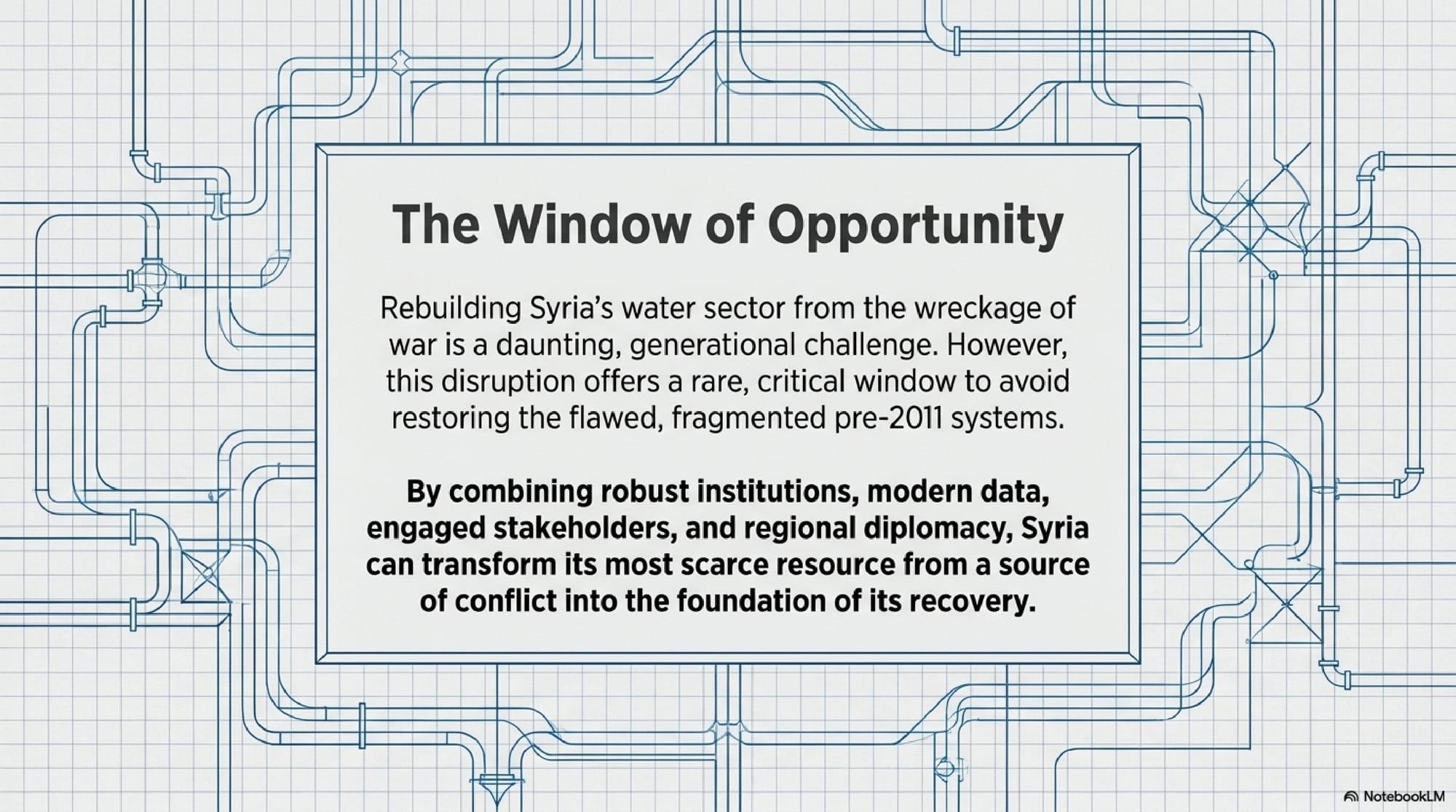
Integrated Water Resources Management (IWRM) in Syria has undergone two stark phases: the pre-2011 period of gradual policy reform amid mounting water stress, and the post-2011 period where conflict largely derailed coordinated water management.

When a globally endorsed framework meets the realities of arid-zone hydropolitics
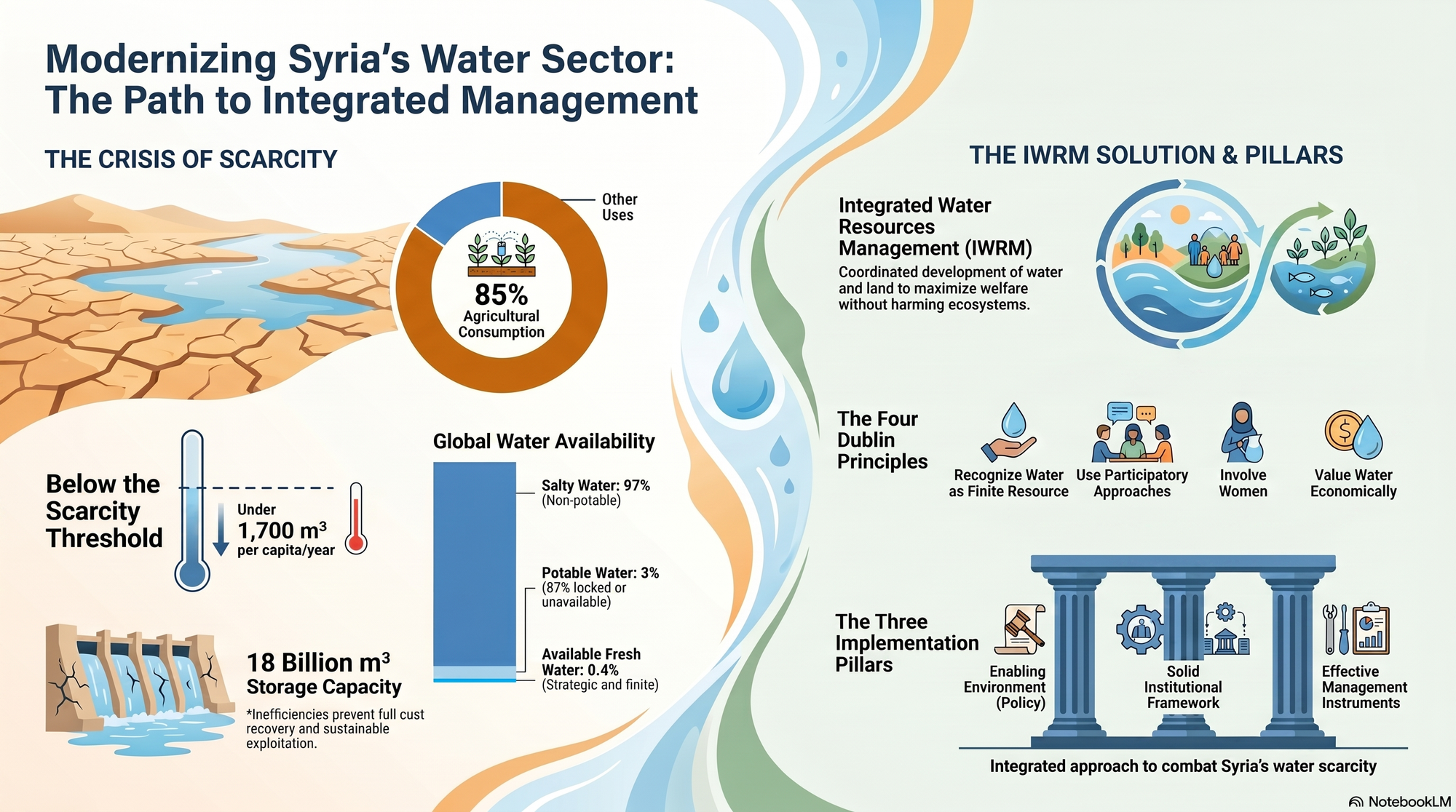
For nearly three decades, Integrated Water Resources Management (IWRM) has served as the dominant paradigm in global water governance. Endorsed by the United Nations, adopted by development agencies, and embedded in national water strategies across more than 80 countries, IWRM promises a rational, coordinated approach to managing water as a finite resource. Its core principles (participatory decision-making, basin-scale coordination, and the integration of social, economic, and environmental objectives) represent an elegant theoretical framework for sustainable water use.
Yet Syria's experience with IWRM, particularly in the decade preceding the 2011 uprising, reveals something uncomfortable: even well-intentioned governance frameworks can fail catastrophically when their underlying assumptions collide with structural realities on the ground. This is not a story of policy incompetence or willful neglect, though both existed. Rather, it illuminates fundamental questions about the portability of water governance models across vastly different political, hydrological, and institutional contexts.
What Syria Actually Looked Like
Long before the war, Syria’s water system reflected decades of state-led hydraulic development. Large dams, extensive irrigation schemes, and agricultural expansion were central to national development strategies. These investments increased food production but also placed growing pressure on rivers and aquifers, particularly in the Euphrates basin and the country’s eastern regions.
Groundwater became a crucial buffer against rainfall variability, but monitoring and regulation lagged behind extraction. By the late 2000s, declining water tables, rising pumping costs, and localized water quality problems were already evident.
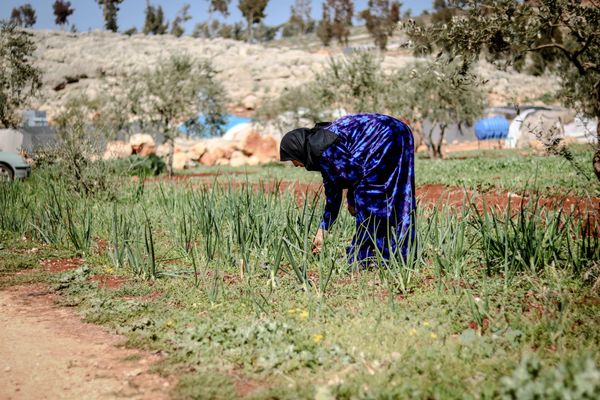
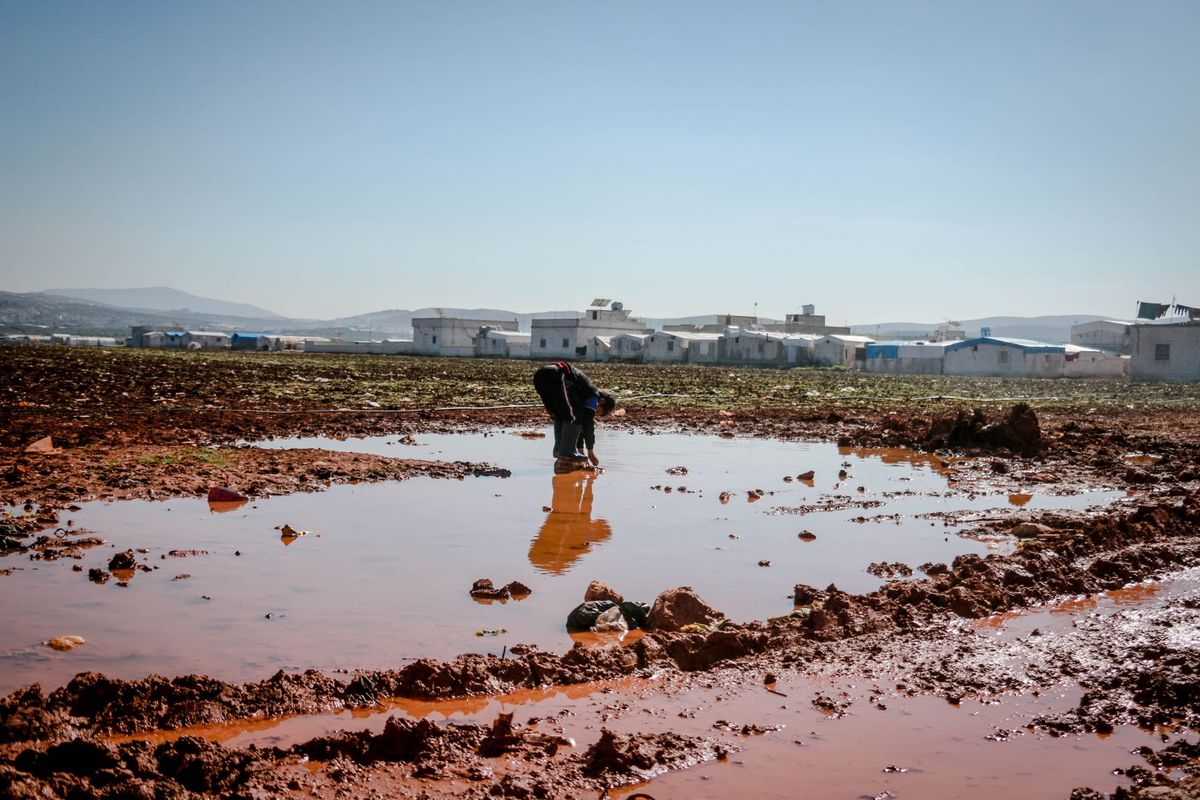
After 2011, conflict reshaped this landscape. Water infrastructure was damaged or destroyed in many areas. Authority over water management fragmented across different actors and territories. Data collection systems weakened or collapsed. Communities increasingly relied on coping strategies from private wells to water trucking and informal arrangements that prioritized immediate survival over long-term sustainability.
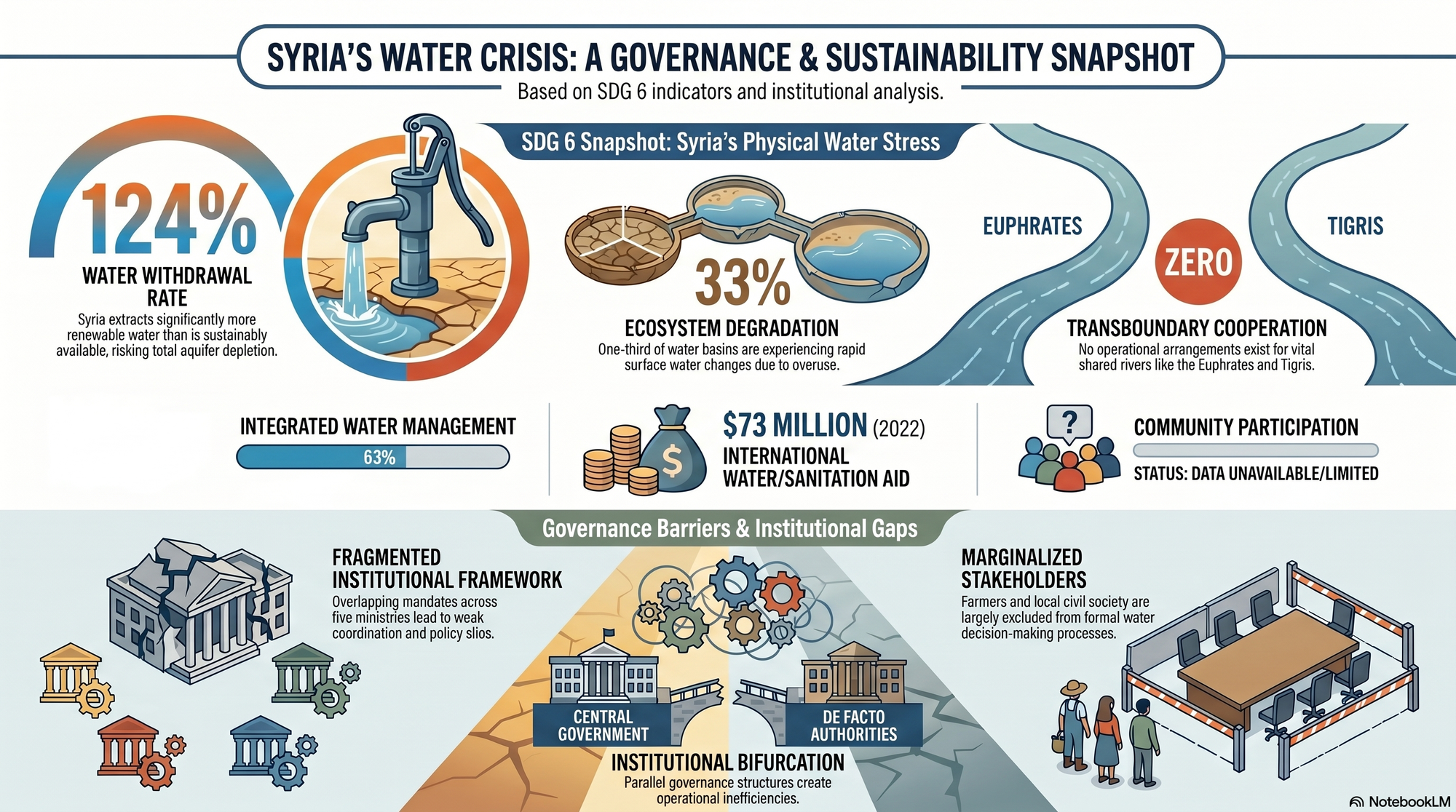
These conditions posed a direct challenge to the assumptions underpinning IWRM.
The Mismatch: Where Theory Meets Reality
The failure of IWRM in Syria was not primarily a technical failure. It was a collision between a governance model designed for one set of conditions and a reality defined by fundamentally different structures.
Basin-Scale Theory vs. Local Political Reality
IWRM envisions management at the hydrological basin scale. But Syria's basins cross international borders (the Euphrates originates in Türkiye, the Orontes flows through Lebanon), making basin-scale coordination contingent on transboundary cooperation that was often adversarial. Domestically, administrative boundaries did not align with watersheds, and attempts to create basin authorities lacked the political backing to override existing ministerial jurisdictions. Even more fundamentally, the concept of a "basin" as the natural unit of management assumes that hydrological logic can supersede political geography. In practice, water allocation decisions were made through political calculus (regime stability, sectoral lobbying, regional favoritism) not hydrological optimization.
Institutional Coordination vs. Coercive State Hydraulics
IWRM's emphasis on inter-ministerial coordination assumes that government agencies operate as relatively autonomous technocratic entities that can be brought into alignment through better procedures and information sharing. Syria's ministries, however, operated within a patrimonial system. Water policy was not the product of coordinated planning; it was the outcome of power struggles between factions, the distribution of rents through irrigation projects and municipal contracts, and the need to maintain support among key constituencies, particularly rural elites in drought-affected regions.
Participatory Governance vs. Authoritarian Control
Perhaps the most glaring mismatch was the assumption that water users could meaningfully participate in decision-making. IWRM frameworks typically call for farmer associations, municipal representatives, and civil society groups to have a voice in water allocation and management. In Syria, such participation was either non-existent or choreographed. Farmer cooperatives existed, but they functioned as transmission belts for state policy, not as genuine representative bodies. The political space for independent advocacy or contestation of water policy was absent. When rural communities faced water shortages, their recourse was not participatory governance but clientelist appeals to regime patrons or, increasingly, desperation and migration.
Economic Instruments vs. Subsidized Overuse
IWRM advocates for water pricing and economic incentives to promote efficiency. Syria maintained heavily subsidized water and energy prices, particularly for agriculture. Electricity for pumping groundwater was cheap; surface water for irrigation was often free. These subsidies were politically entrenched, serving as a form of social contract with rural populations. Attempts to reform pricing faced immediate political resistance. In a context where agriculture employed a large share of the population and where regime legitimacy depended partly on delivering material benefits, raising water prices was seen as politically destabilizing. Economic rationality, from an IWRM perspective, collided with political survival logic.
None of these challenges are unique to Syria. But Syria makes them visible in stark terms.
Lessons beyond Syria
The failure of IWRM to take root in Syria does not mean the framework is inherently flawed. Rather, it highlights its context sensitivity. IWRM was developed primarily with stable governance environments in mind, settings where coordination is difficult but possible and where institutions can gradually evolve.
In fragile and conflict-affected contexts, insisting on full integration may be unrealistic. The pursuit of ideal governance can distract from more urgent priorities: ensuring minimum water access, protecting groundwater from irreversible depletion, and reducing public health risks. Across the Middle East, climate change is increasing variability, while political and economic pressures strain water systems. Syria’s experience suggests that water governance under such conditions may need to be more modular and adaptive, focused on what can function now rather than what works in theory.
Rethinking integration under crisis
Syria's water crisis was not caused by the failure to implement IWRM. It was the product of decades of unsustainable extraction, climate variability, political economy distortions, and ultimately, catastrophic state collapse. IWRM did not fail Syria; rather, Syria's structural conditions made IWRM unviable from the start.
This distinction matters. If we diagnose the problem as "poor IWRM implementation," the solution appears to be better training, more technical assistance, stronger institutions, more of the same. But if we recognize that IWRM's foundational assumptions were incompatible with Syria's political, hydrological, and institutional realities, we must ask deeper questions about how water governance frameworks are designed, promoted, and transferred across contexts.
The following recommendations, informed by past lessons and IWRM best practices, could guide the way forward:
1. Rebuild and Reform Institutions for Integrated Management.
2. Update and Consolidate Water Legislation. 3. Restore Infrastructure with Resilience in Mind
4. Implement Demand Management and Improve Water Use Efficiency
5. Enhance Data, Monitoring, and Knowledge-Sharing
6. Institutionalize Stakeholder and Community Engagement
7. Prioritize Transboundary Water Cooperation and Regional Integration
8. Integrate Water Strategy with Broader Reforms (Water-Food-Energy Nexus)
What might this look like in practice?
Instead of comprehensive basin-wide integration, governance efforts could prioritize minimum service delivery, groundwater protection, and risk reduction. Coordination can occur where feasible, but without assuming full institutional coherence. Data systems can be simplified, focusing on critical indicators rather than exhaustive monitoring.
Importantly, this is not a retreat from science-based management. It is an argument for aligning scientific frameworks with political and social realities.
Syria’s water crisis is often discussed as a story of failure. Seen differently, it is a lesson in limits, and in the need for water science to engage honestly with fragility. As climate stress deepens across the region, those lessons will only become more relevant.