On the Untranslatable Ocean of Ghurba
Exile is a sentence imposed upon you by a clumsy world. But Ghurba is a gentle, reminder that your true home isn't built of stone or borders but is found wherever you find the courage to speak the true vocabulary of your own journey.

There are moments when language must strip off its rigid administrative armor and become entirely fluid, like water flowing through an ancient terracotta channel. To write about displacement is to realize that the modern world has grown terribly adept at building maps, yet entirely blind to the human landscapes trapped beneath them.
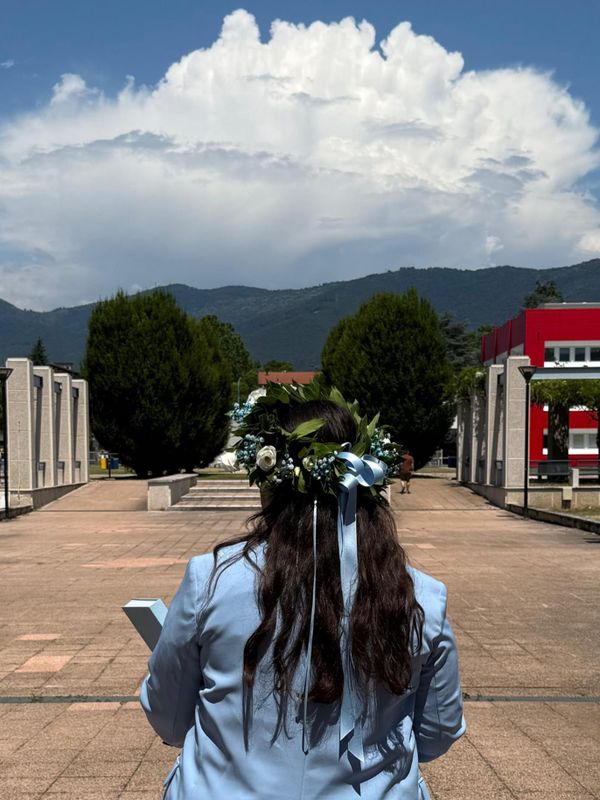
This thought has lingered in my head since I met a few colleagues recently. Honestly, to sit in a room in Italy, surrounded by colleagues who use the light, airy word "expat" like a summer cloak, while I carry the heavy, ancient mantle of the "immigrant" or the "exiled," is to stand on opposite sides of a vast linguistic canyon. It is the perfect example of how the modern world uses language not to reveal truth, but to hide its own privileges.
But, I told them, in my language, Arabic, there is another word that could fit more: غربة (Ghurba).
Let me explain.
Exile is defined by the forced mirror of a boundary, a literal door to your homeland that has been locked from the outside, its key tossed into a deep well. The emotional landscape of exile is thick with fury and a fierce, unyielding nostalgia. It is an identity obsessed with the past, standing at a barbed-wire fence, shouting back at a land that can no longer hear your voice. It is a state of being dictated by the external world: by visas and documents that tell your body where it is legally permitted to breathe.
But Exile, for all its brutality, only holds power over your physical location. It stops at the skin.
But غربة (Ghurba)?
Ghurba is an untranslatable ocean that does not require an army or a passport officer to exist. The very root of the word crawls out from Gharb (the West), the precise point where the sun sets, evoking that slow, twilight space where the light inevitably fades into darkness. To live in Ghurba is to accept the permanent mantle of the Ghareeb (the stranger).
While exile happens to your physical body, Ghurba happens to your consciousness. It is a slow, quiet, melancholy mist rather than a sharp fracture. You can experience Ghurba while standing in the very center of the neighborhood where you were born, suddenly realizing that the language, the customs, or the people around you no longer match the internal architecture of your soul.
It is the supreme paradox of the displaced heart. It is a homesickness that cannot be cured by simply buying a plane ticket back to the streets of Damascus or Aleppo because the home you are sick for is a landscape of time, memory, and innocence that no longer exists on any geographic map.
Yet, within the quiet weight of Ghurba, there lies a magnificent, hidden grace.
Exile leaves you angry, turning your story into a political statistic. But Ghurba softens the edges; it leaves you deeply contemplative. It turns the wanderer into a philosopher, a writer, and an engineer of deeper systems.
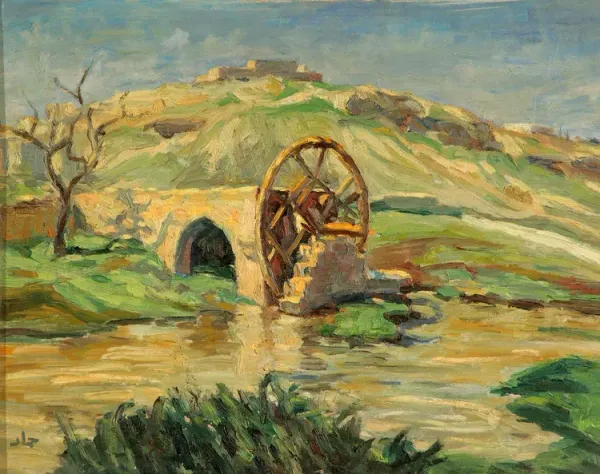
When you accept the identity of the Ghareeb, your eyes change. It is precisely the stranger who notices the true rhythm of the river, the unique, groaning hum of the ancient timber Norias, or the delicate, fleeting beauty of a sparrow landing on a balcony saucer. Because you do not belong entirely to the soil beneath your feet, you are free to belong to the infinite sky above.