The Traditional Lemon Houses (“Limonaie”) of Lake Garda

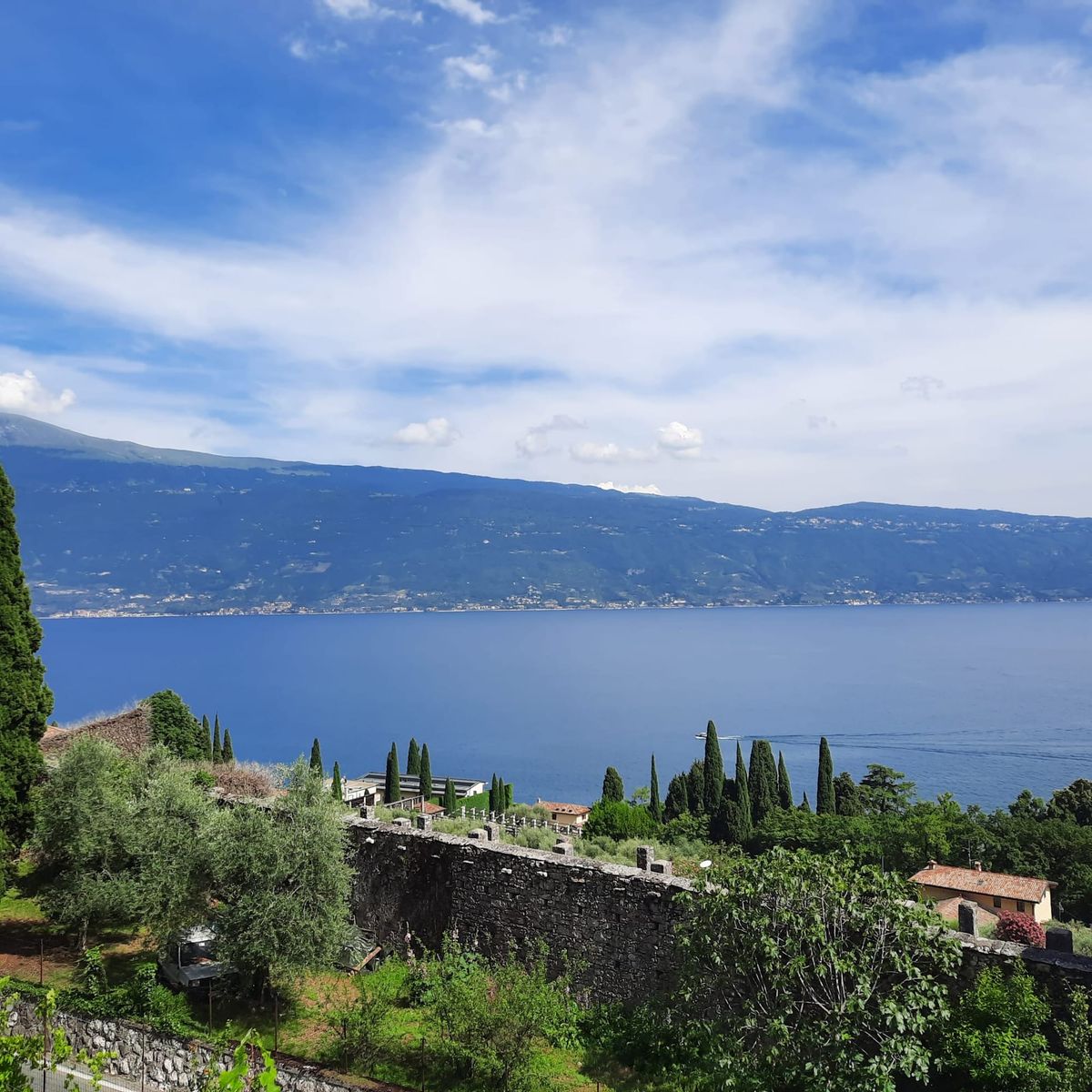
Although Italian lemons are often associated with sunny southern regions like the Amalfi Coast or Sicily, Lake Garda in northern Italy has its own remarkable citrus heritage. Along the lake’s western shores, generations of growers cultivated lemons, oranges, and citrons in specialized terraced greenhouses called limonaie. These lemon houses, unique to Lake Garda, enabled a thriving citrus trade for over four centuries. This blog explores the historical architecture of the limonaie, their agricultural function in citrus cultivation (including ingenious irrigation methods), and their value as a cultural heritage symbol of the Lake Garda region.
Historical Architecture: Ingenious Design for a Harsh Climate
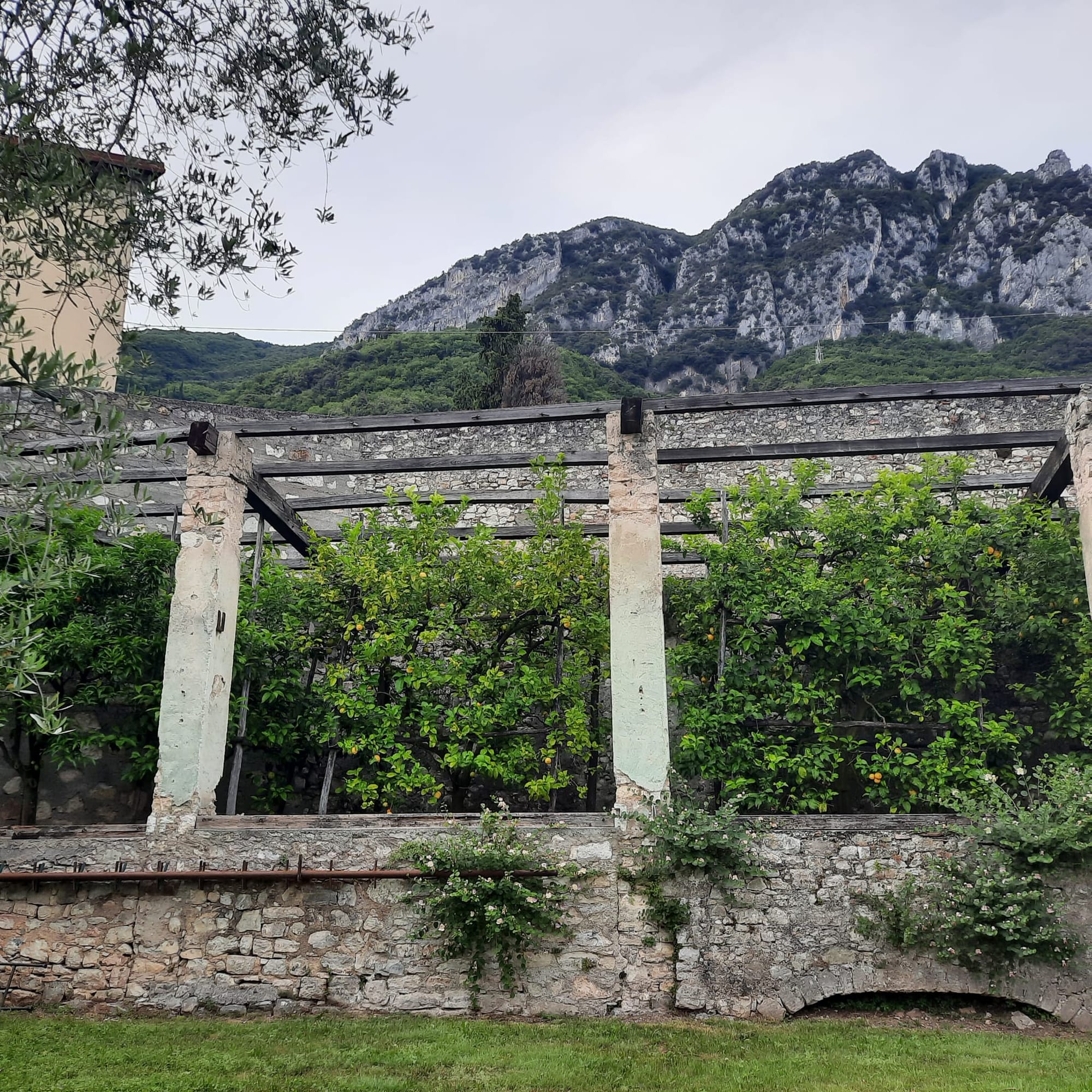
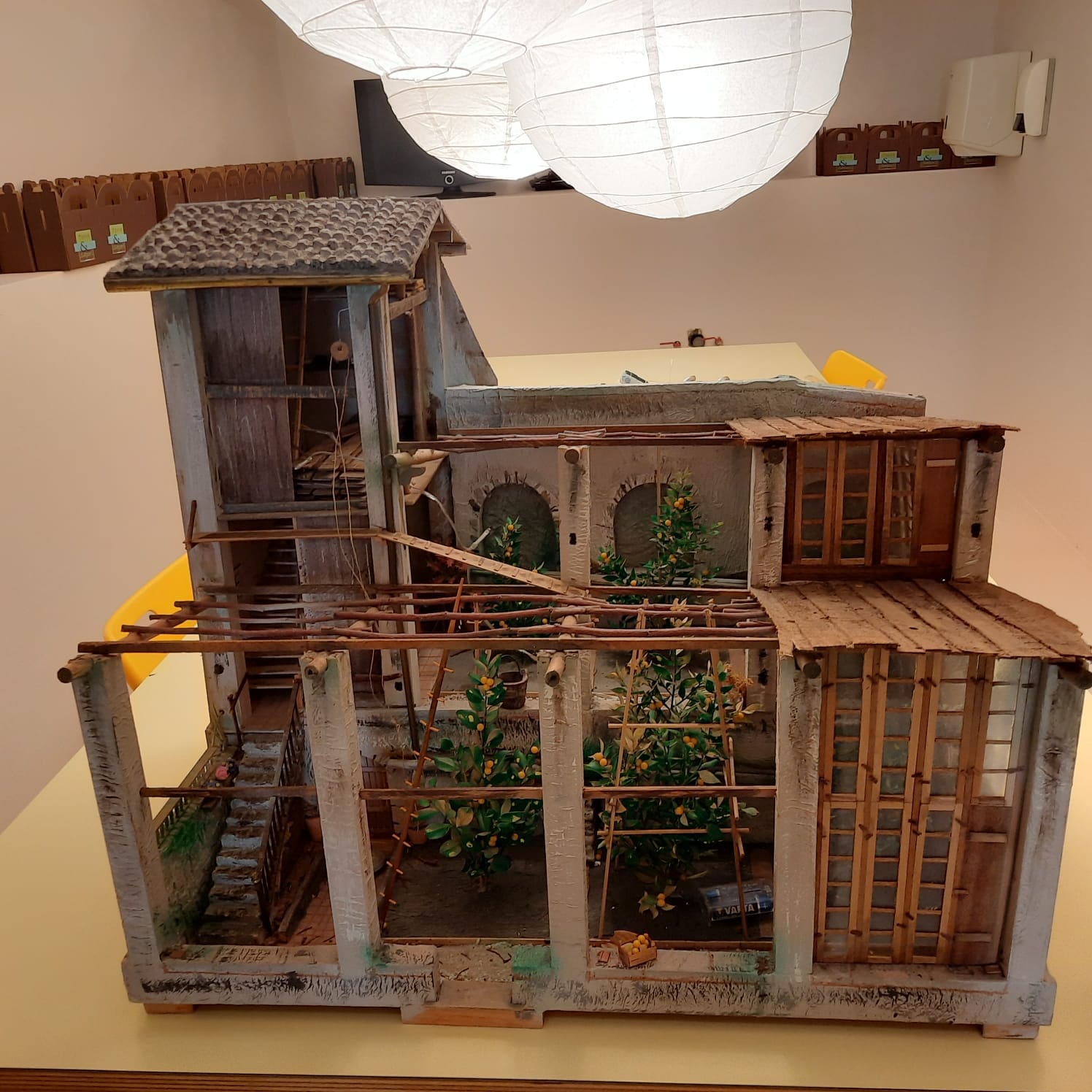
Lake Garda’s traditional limonaie are a blend of architecture and agriculture, purpose-built to shelter citrus trees from chilly winters. The first lemon houses were constructed in the 17th century, when local farmers began to adapt their structures to protect delicate lemon trees from frost. Typically built against the steep mountainsides, the limonaie consist of multiple stone terraces carved out of the rock, creating tiered platforms up the slope. Sturdy masonry pillars line each terrace in neat rows, supporting a framework of thick wooden beams.
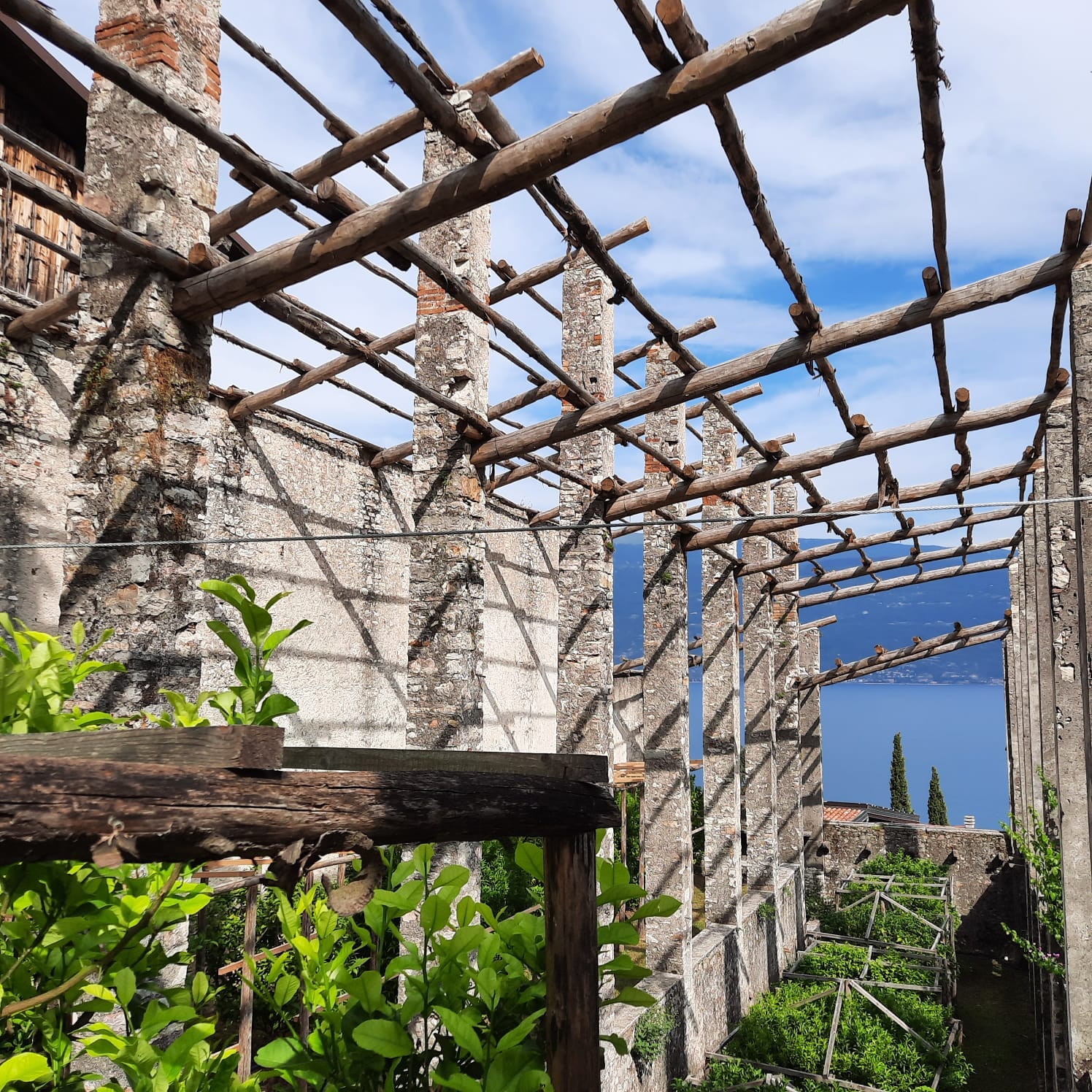
During the warm spring and summer, the terraces are open-air. Come late autumn, however, farmers would transform these structures into seasonal greenhouses: they fitted the frames with removable wooden boards and glass panels to enclose the lemon groves from November to March. High stone walls on the cold north side and at the ends of the terraces further shielded the trees from northerly winds. In especially frigid spells, fires or braziers were lit inside the covered limonaie to raise the temperature; at night one could see the lemon houses glowing from across the lake.
This architectural ingenuity allowed Lake Garda’s lemon growers to push the boundaries of citrus cultivation. Johann Wolfgang von Goethe, traveling by boat in 1786, marveled at Limone sul Garda’s “terraced gardens, planted with lemons,” noting the “rows of white square pillars… up the mountain as steps” with “strong beams… placed over these pillars to cover the plants during the winter.” He called the vista a “pleasant spectacle” as his slow boat journey let him absorb the view. Indeed, by the 18th century the shoreline from Toscolano-Maderno to Limone was dotted with imposing lemon houses; an iconic architectural feature of Lake Garda’s landscape. Many structures included small stone cabins or sheds built into the terraces as well, where tools were stored and workers could take shelter. Everything about the limonaie’s design was optimized for citrus cultivation: from the south-facing orientation and terraces maximizing sun exposure, to the carefully aligned pillars and beams that turned the groves into insulated “winter gardens” when frost threatened.
Agricultural Function: Citrus Cultivation and Water Management
The primary purpose of these lemon houses was to make commercial citrus farming possible in Lake Garda’s cooler climate. By sheltering the trees in winter, the limonaie created a micro-environment where lemons, oranges, and other citrus could thrive hundreds of kilometers north of their usual range. As a result, by the 1700s Lake Garda had become the northernmost citrus-producing area in the world. The lemons grown here (often of a variety called Madernina native to Garda) were famed for their aromatic oil, intense acidity, and long-lasting freshness. Demand for Garda’s citrus boomed. Wealthy families invested in expanding lemon houses in the 18th century, turning citrus into a pillar of the local economy. At the industry’s peak, tens of thousands of lemons were exported from Lake Garda each year, shipped by boat and cart to markets as far as Germany, Poland, and Russia. Northernn European buyers paid a premium for Garda lemons; their quality was so prized that they sold for up to three times the price of southern Italian lemons. Thanks to Lake Garda’s location, central European countries could get citrus “in a shorter time and at a lower cost” than importing from Sicily, which further spurred the trade.
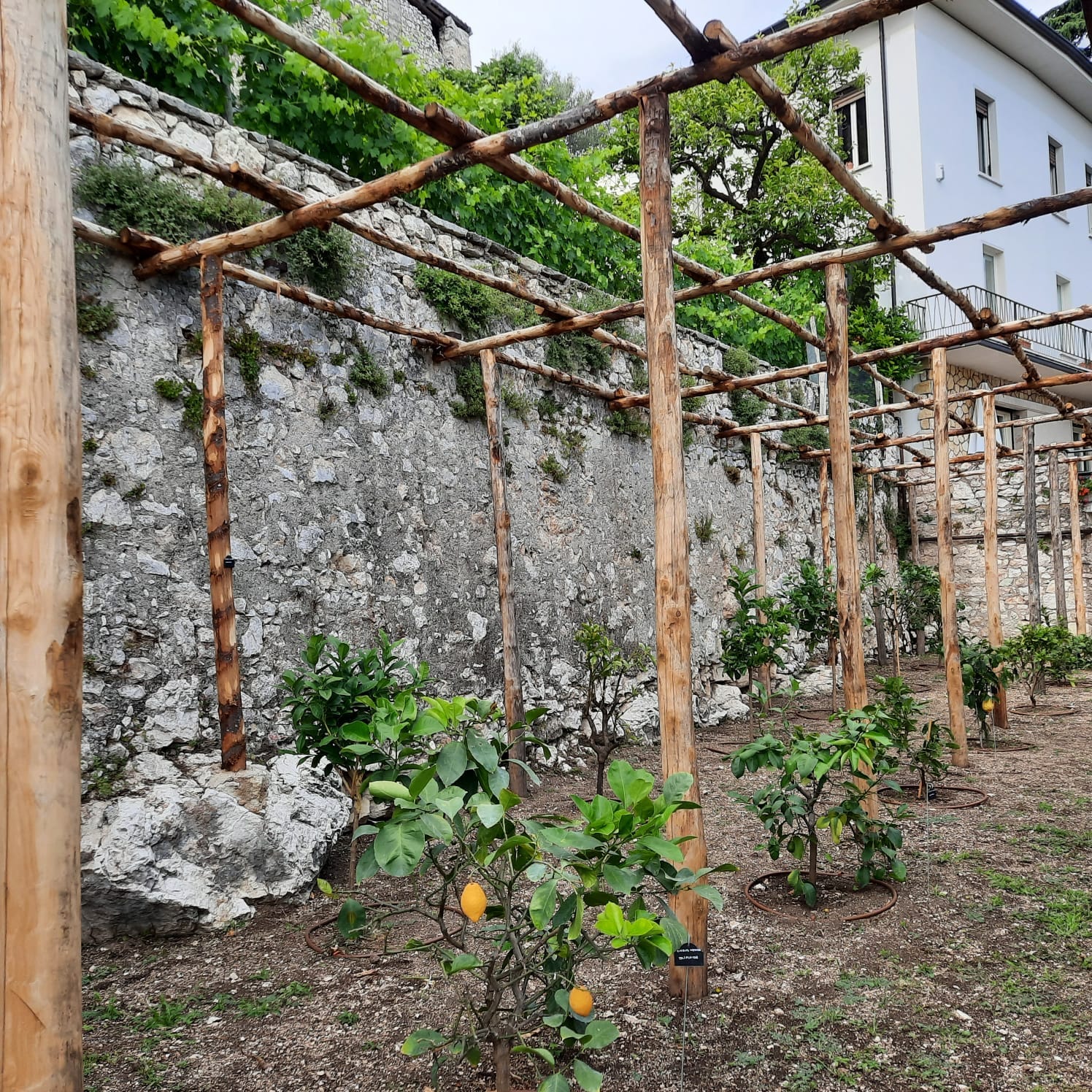
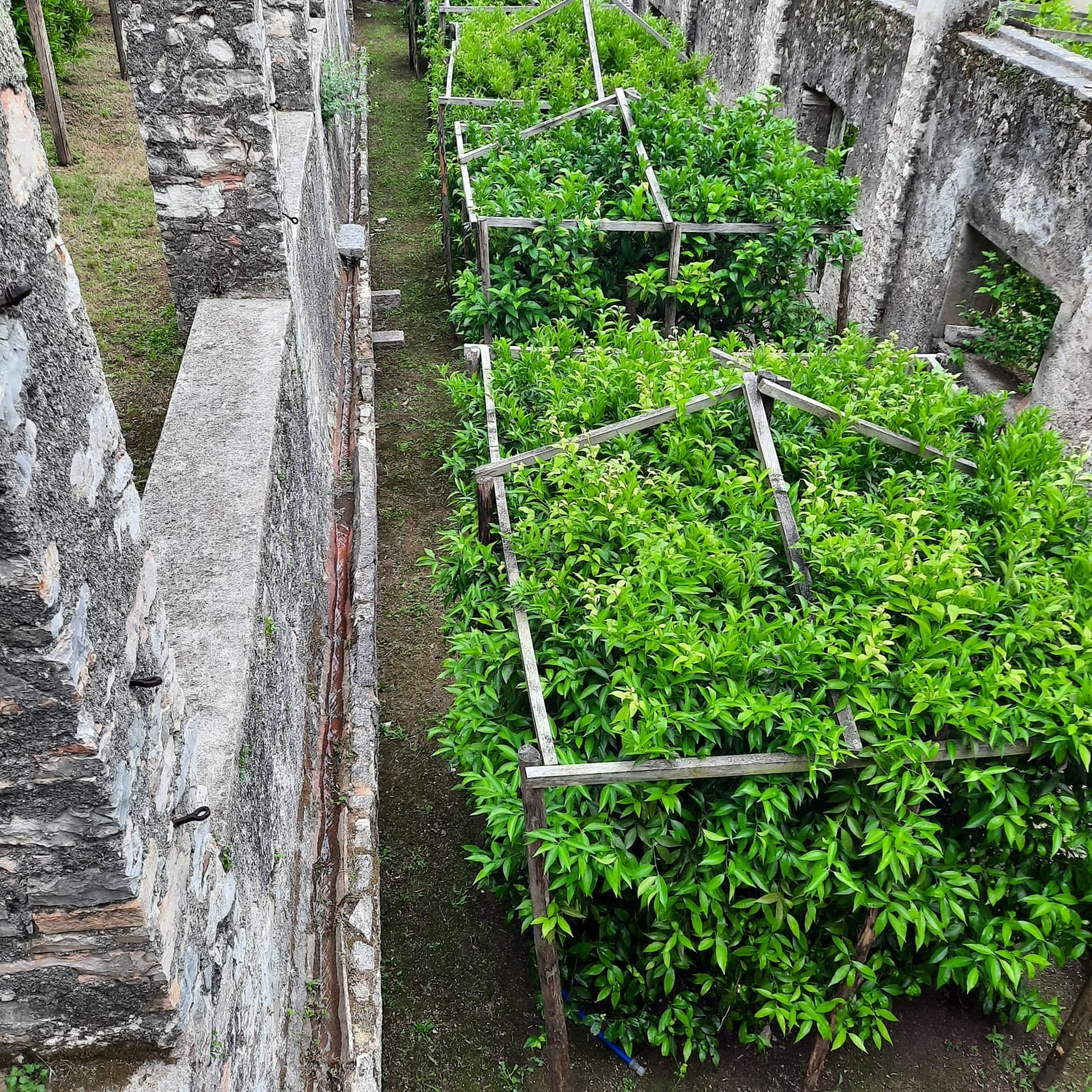
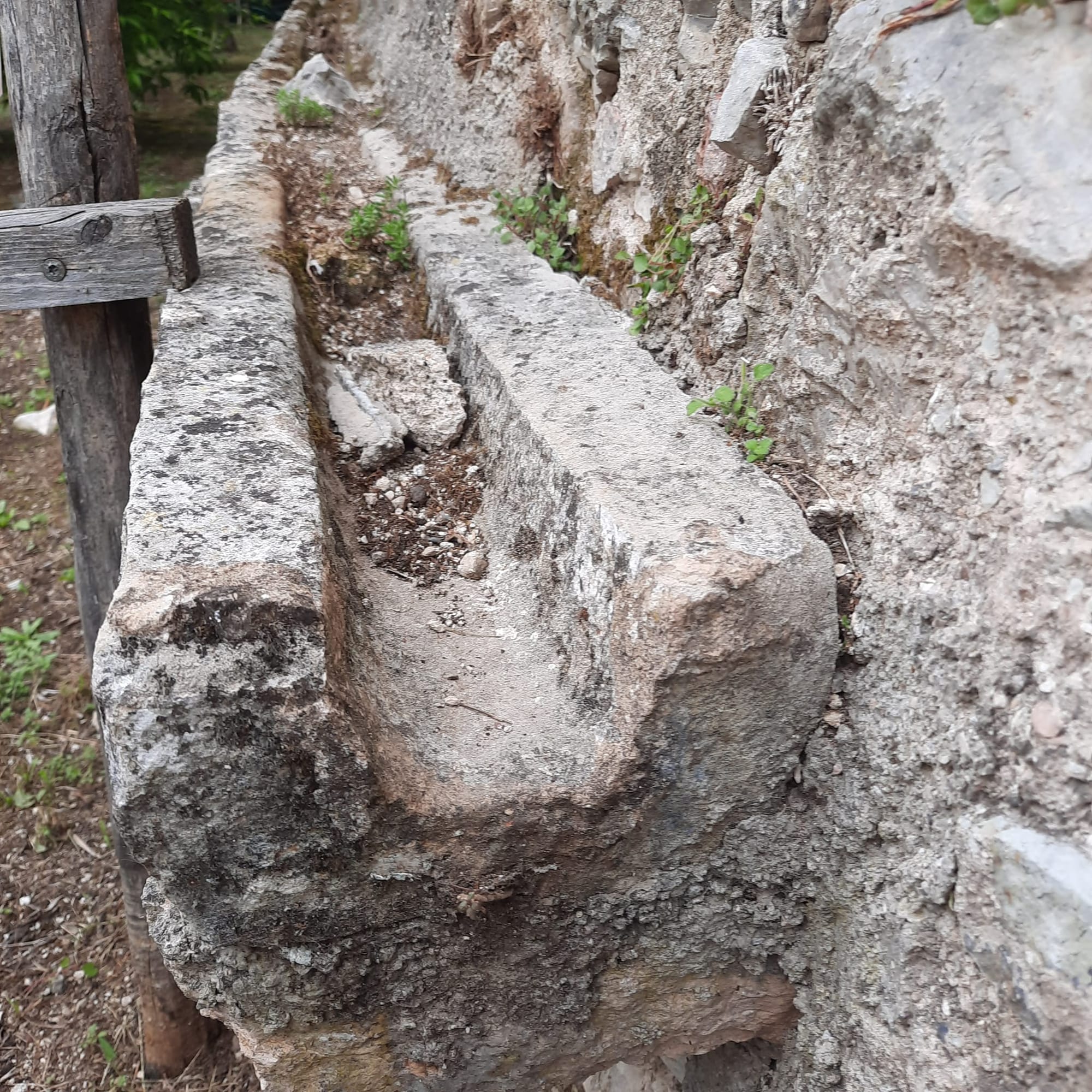
Beyond protecting trees from cold, the limonaie also featured clever water management to support citrus cultivation. Rainfall alone was not sufficient for the thirsty lemon groves, so growers engineered irrigation systems into the very structure of the lemon houses. Each terrace was outfitted with stone-lined channels to distribute water to the trees. Using the gravity of mountain streams, water was led from nearby creeks (for example, via the 18th century Calmèta aqueduct in Limone) into the upper terrace canals.
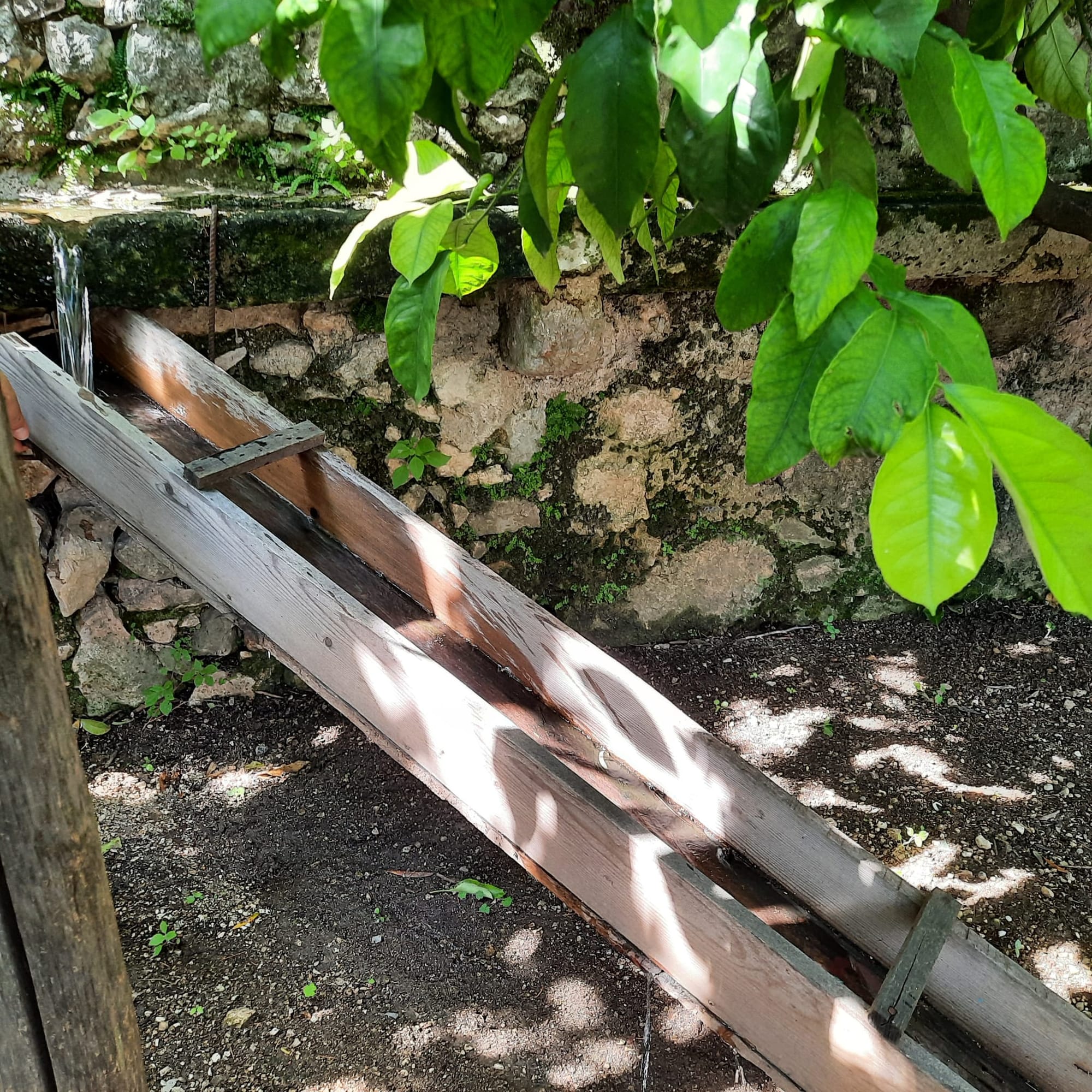
Gardeners could then divert the flow to each tree as needed: they placed sandbags or wooden stopplanks in the channels to flood a section, and used portable wooden troughs as gutters to guide water directly to a tree’s base. At the end of a trough, twigs or brush would disperse the flow gently around the roots, mimicking a natural rain shower.
Not a drop was wasted; before planting their citrus, the growers even sealed the soil of each terrace with a layer of lime plaster to retain moisture and prevent water from draining away too quickly. This combination of terrace design and irrigation engineering was highly effective. Garda’s lemon farmers overcame three main challenges: “fighting the cold, finding good soil, and bringing water”; and in doing so they created a thriving citrus oasis against the odds.
The agricultural output of the Garda lemon houses was not limited to lemons alone. In their heyday, over 50 varieties of citrus were grown along the lake’s shores; from sweet oranges and mandarins to bergamots, chinotto bitter oranges, and even cedro (citron fruit). Notably, the town of Salò on Lake Garda developed its own prized citron variety, the “Cedro di Salò,” which was eventually reintroduced to the area in modern times after nearly disappearing.
The legacy of innovation in these gardens also lives on in regional products: the methods pioneered for lemon cultivation contributed to local knowledge in horticulture and irrigation, and they set the stage for modern Garda delicacies like limoncello liqueur and citrus marmalades. While today only a handful of historic limonaie still produce fruit (mostly in small, local yields ), their influence on Lake Garda’s agricultural traditions remains profound.
Cultural Heritage: Legacy in Local Tradition and Identity
Beyond their practical purpose, the limonaie of Lake Garda hold a treasured place in the region’s culture and identity. For roughly three centuries, citrus was a backbone of the local economy and shaped the daily lives of communities from Toscolano-Maderno up to Limone sul Garda. Entire families and villages were involved in tending the lemon houses, harvesting fruit, and trading with merchants from across Europe. The very landscape was transformed: the image of white pillar rows climbing the green hillsides became synonymous with Lake Garda’s Riviera, earning it the nickname “Riviera dei Limoni” (Riviera of Lemons). Writers and artists traveling in Italy were enchanted by these terraced lemon gardens. Not only Goethe in the 18th century, but also later visitors like novelist D. H. Lawrence, who lived on Lake Garda and admired the ingenuity of the limonaie. In the words of one modern historian, “the lemon houses [are] a monument to the know-how and environmental expertise of Lake Garda”, representing a unique human adaptation to nature. They stand as living symbols of the locals’ resilience and entrepreneurial spirit.
However, the story of Lake Garda’s lemon houses also includes periods of decline. By the late 1800s, the citrus industry around the lake began to falter. A plant disease known as gummosis struck in 1855 and wiped out many lemon trees. Meanwhile, Italy’s unification opened up easier trade with southern citrus growers; lemons from the South (which didn’t require costly winter protection) flooded the market and drove prices down. The invention of synthetic citric acid further reduced demand for natural lemons. As profits fell, many limonaie were abandoned or converted to other uses around the turn of the 20th century. The final blow came with World War I and an exceptionally cold winter in 1928–29, after which large-scale lemon cultivation on Lake Garda virtually ended. Many local people emigrated or returned to traditional olive farming and fishing to survive.
In recent decades, though, there has been a renaissance of appreciation for these historic structures. The remaining lemon houses are now protected as cultural heritage sites, and some have been carefully restored and opened to visitors. Walking through a limonaia today is like stepping back in time; the scent of citrus blossoms and the sight of ancient lemons clinging to branches evoke the glory days of the “gardens of lemons.”