When Media Says Drought Causes War: From Syria to Iran, a Familiar Story Repeated


In recent years, a familiar media script has re-emerged: drought triggers conflict. It was said about Syria after 2011. It is now increasingly said about Iran amid water protests and social unrest. The narrative is tidy, urgent, and emotionally persuasive. It is also deeply incomplete.
This framing usually follows a linear arc: climate change intensifies drought; drought devastates rural livelihoods; people migrate or protest; instability escalates into conflict. It offers a single, external cause, "environmental stress," to explain complex political breakdowns. For media audiences, the appeal is obvious: the story is visual, global, and morally legible. But clarity is achieved at the cost of accuracy.
Syria: how a drought became the explanation?
In Syria, the 2006- 2010 drought was real, severe, and damaging. Media accounts frequently elevated it into a primary trigger of the uprising, portraying environmental stress as the hidden hand behind rebellion. Yet detailed historical and political analyses tell a different story. Rural distress long predated the drought, shaped by subsidy withdrawals, land policy shifts, groundwater over-extraction, and entrenched inequality. The protest in 2011 did not emerge from drought-stricken villages alone; it erupted across cities where political repression, corruption, and exclusion were the dominant grievances.
By foregrounding drought, media narratives subtly displaced responsibility. Structural governance failures became background noise, while climate change took center stage. The result was not just simplification but depoliticization: conflict appeared almost inevitable, a natural disaster rather than a political outcome.
Iran: a recycled frame, adjusted for unrest
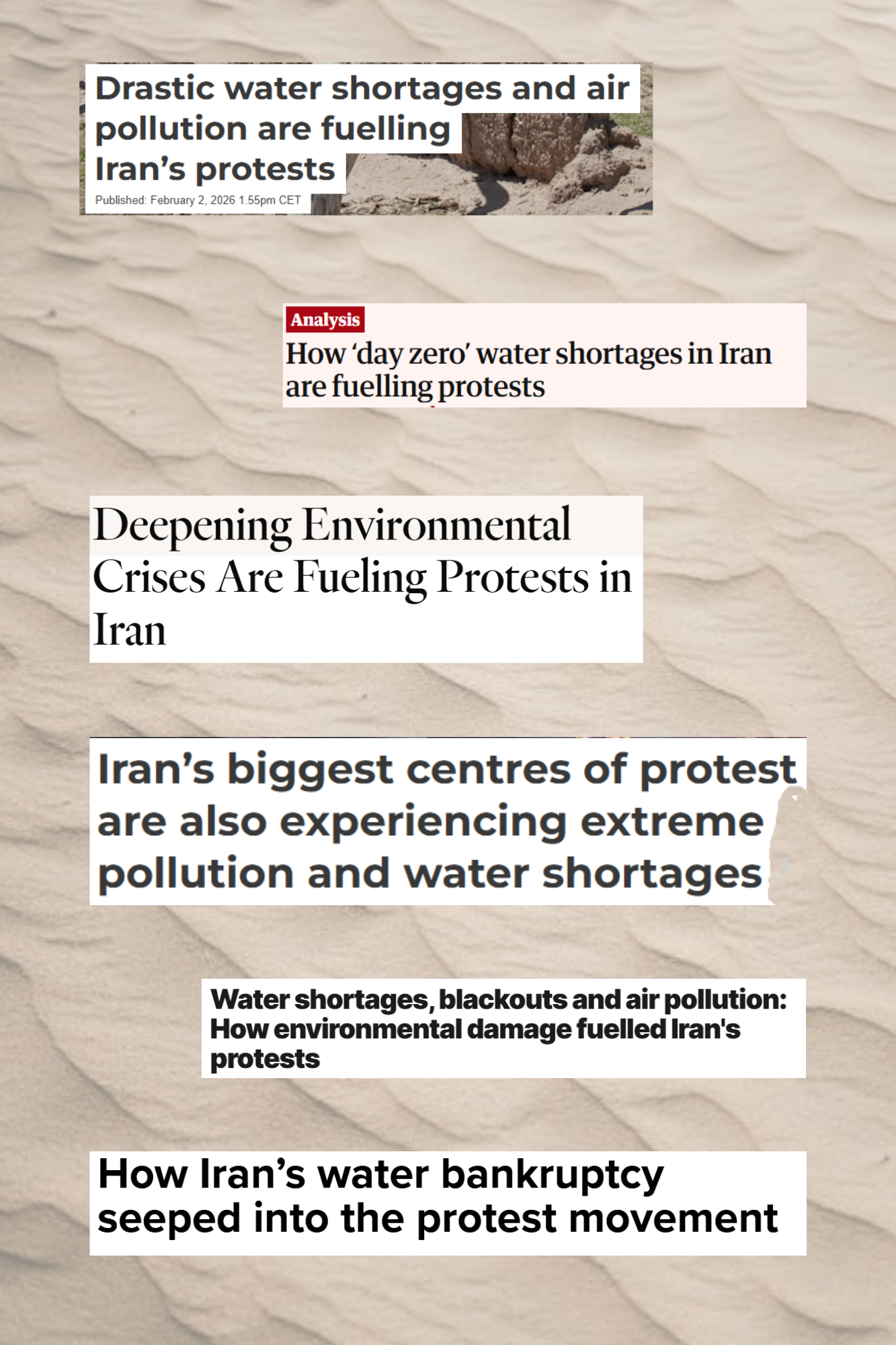
In Iran, water scarcity is now routinely invoked to explain protests, from farmers to urban demonstrations over supply cuts and misallocation. Again, drought is real. So are drying rivers and shrinking aquifers. But protests are not simply reactions to rainfall deficits. They are responses to allocation decisions, infrastructure priorities, center-periphery inequalities, and long-standing economic pressure.
Media coverage often presents water stress as the spark, while treating governance as a secondary modifier. This reverses causality. Scarcity becomes explosive not because it exists, but because institutions manage it unevenly, opaquely, and politically. By repeating the drought-conflict script, coverage risks framing unrest as environmentally driven inevitability rather than as contestation over power and distribution.
Why this narrative keeps winning
The persistence of the drought-conflict storyline is not accidental.
- It is simple: one cause, one outcome.
- It aligns with climate advocacy frames that seek tangible human impacts.
- It travels well across regions, allowing Syria and Iran to be folded into a single global story.
- It is visual: cracked soil photographs explain more quickly than governance charts.
But simplicity is not neutrality. When drought is presented as the prime mover, political agency fades. States become victims of climate, not authors of policy. Protesters become climate migrants, not citizens making claims.
The analytical cost of reductionism
Reducing conflict and unrest due to drought has consequences. It narrows policy responses to technical fixes (better forecasting, climate adaptation) while sidelining reform of institutions, accountability, and rights. It also risks a form of environmental determinism that treats societies in West Asia as uniquely fragile to climate stress, while similar environmental pressures elsewhere are framed as governance challenges rather than precursors to conflict.
Drought matters. Also climate change matters. But they are stress multipliers, not master explanations.
A better way to tell the story
A more honest narrative would start from governance and work outward:
- How are water and land allocated?
- Who absorbs scarcity, and who is protected from it?
- When does environmental stress become political grievance, and who frames it that way?
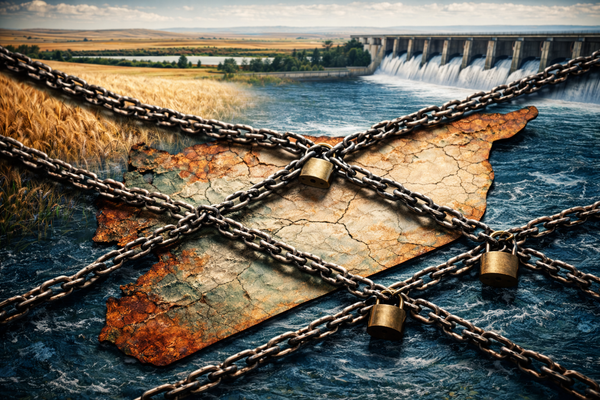
In both Syria and Iran, drought did not speak for itself. It was interpreted, managed, and politicized through institutions. Media stories that begin and end with climate miss the point. And I have not spoken about the external element of long-imposed sanctions in both countries hindering any improvement in the water management practices and leading to an economic collapse.
The real question is not whether drought causes conflict. It is why scarcity becomes intolerable in some political systems and negotiable in others. Until that question leads the story, the same narrative will keep being recycled—clear, compelling, and quietly misleading.